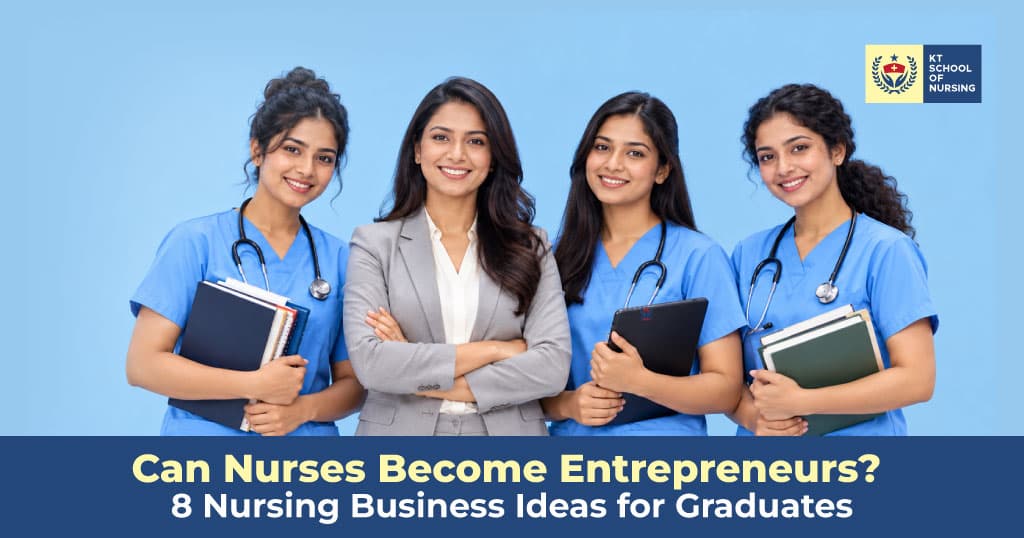
For many nursing graduates, the obvious next step is to look for a role in a hospital, clinic, or community healthcare setting. But nursing can open doors beyond a conventional job. The experience you gain in caring for patients, communicating with families, and understanding everyday healthcare needs can also become the foundation for something of your own.
That does not necessarily mean opening a clinic or taking on a large investment. There are many ways for nurses to build services around the skills they already have. For students still deciding which path to take, exploring the nursing programs at KT School of Nursing can be one way to understand the different educational routes available.
So, can nurses become entrepreneurs? Yes, but the opportunity lies in finding a business model that genuinely fits your training, experience, and the needs you want to address. Here are eight ideas worth exploring, along with the practical considerations that come with each one.
Yes, nursing graduates can explore entrepreneurship. However, owning or managing a healthcare business is different from independently performing every clinical service the business offers. The model should match the qualifications, registration status, and competence of those delivering care, as well as local requirements. Information from the Indian Nursing Council can help readers understand recognised nursing programs and registration-related requirements.
A nurse may create a care-related service, train caregivers, produce health-education material, coordinate support, or help build healthcare technology. A strong idea solves a defined problem within professional and regulatory boundaries.
Home nursing services directly connect nursing skills with a business model. Depending on requirements, a venture may focus on nursing visits, health monitoring, post-discharge support, or caregiver coordination.
An elder-care service can help families organise everyday support, appointments, care routines, and communication with healthcare providers. Nursing knowledge can add value to coordination without presenting the service as a substitute for a doctor or another authorised professional.
Graduates with strong teaching skills can build training services for caregivers, families, students, or organisations. Topics may include patient-care routines, hygiene, communication, and safe caregiving practices. Trainer qualifications and certification requirements should be clear before offering the service.
A nurse may also build a training service for schools, workplaces, or residential communities. The program should use appropriate trainers, recognised standards, and any certification or provider requirements that apply. The opportunity is to package a defined learning need into a structured service with suitable trainers and safety standards.
Families may need help organising appointments, reports and consultation questions. A nurse-led service could provide education and coordination while leaving diagnosis, prescribing and treatment decisions to authorised professionals.
Nurses can create education-focused services for schools, workplaces, communities and local organisations. Possible areas include health literacy, hygiene, preventive health, maternal and child health education, or healthy-living sessions. Workshops and recurring programs can form the service model.
Nursing knowledge can also support work outside face-to-face care. A graduate can build a content service creating patient-friendly educational material, nursing study resources, or healthcare communication for organisations.
Accuracy is essential. Health content should distinguish general education from personal medical advice.
Some graduates may prefer to build a healthcare startup rather than deliver services themselves. Examples include appointment-support tools, caregiver systems, patient follow-up platforms, or nursing education technology.
A nurse can contribute by identifying real care problems, testing workflows, and helping technical teams design around patient needs.
Your nursing qualification shapes the professional knowledge, skills, and pathway you bring to an entrepreneurial venture. A qualification provides a foundation for professional practice, but it does not automatically authorise you to offer every type of healthcare service.
For students exploring a B.Sc. Nursing course in Bhubaneswar, different programs provide different foundations for professional practice. The B.Sc. Nursing program at KT School of Nursing, for example, includes clinical practice along with areas such as community health, communication and leadership. Its program also identifies home-care nursing among potential career paths.
The type of service matters as much as the qualification itself. A healthcare venture should be built around the actual services the founder and team are qualified, registered and prepared to deliver, along with any additional requirements that apply to the business model.
Graduates considering a GNM nursing course in Bhubaneswar can explore the program at KT School of Nursing while assessing whether their proposed business activity is consistent with their qualification, registration status, and professional responsibilities.
For students comparing nursing colleges in Bhubaneswar, it is therefore useful to look beyond course titles and consider the practical experience, professional skills and areas of learning that a program develops.
A healthcare venture has responsibilities beyond ordinary business planning. Before launching, check:
The Indian Nursing Council publishes nursing standards, programs and regulations that can help with professional checks.
In Odisha, state requirements can also apply depending on the model. The Department of Health & Family Welfare publishes the state's clinical-establishment acts and rules as well as registration-related forms.
Do not assume that a home-care service, training centre, clinic, or healthcare-support business follows the same rules. Verify the requirements for the exact service, premises, staffing model, and location.
A good starting point is to ask four simple questions: What problem are you trying to solve? What skills do you already have? What resources can you realistically access? And how much professional and regulatory responsibility does the idea involve?
The right opportunity will depend partly on your educational and professional background. Graduates considering an ANM nursing course in Bhubaneswar can also explore the program at KT School of Nursing, while assessing whether the proposed service matches their training, registration, and applicable requirements.
A clearly defined small service may be easier to test than a large venture requiring premises and multiple employees. Start with a customer need, understand costs, and refine the model using feedback.
Nurses can explore entrepreneurship by turning healthcare knowledge, communication skills, and patient-care experience into services, training, education, or technology ventures. The eight healthcare business options above range from home care and elder support to training, patient navigation, content, and digital solutions.
The first step, however, is to build the right professional foundation and understand where your training fits within the service you have in mind. For students who are still choosing their nursing pathway or exploring their next step, KT School of Nursing’s contact page provides a direct way to enquire about its programs and admissions.
A nurse can explore healthcare entrepreneurship, but the model must match the qualifications of the people delivering services and comply with requirements for the specific activity.
Options include home healthcare, elder-care coordination, caregiver training, first-aid education, patient-support services, health workshops, healthcare content, and digital care solutions.
Yes. A B.Sc Nursing graduate can use nursing knowledge and professional experience as a foundation for a healthcare-related venture, subject to the requirements of the service being offered.
They can explore entrepreneurship, but the activity should be consistent with their qualification, registration, and applicable professional and local requirements.
Check professional registration and scope of practice, local permissions, staffing, safety procedures, documentation, privacy, insurance, and other requirements relevant to the exact service.
Turn your passion for care into a respected profession that changes lives every single day.