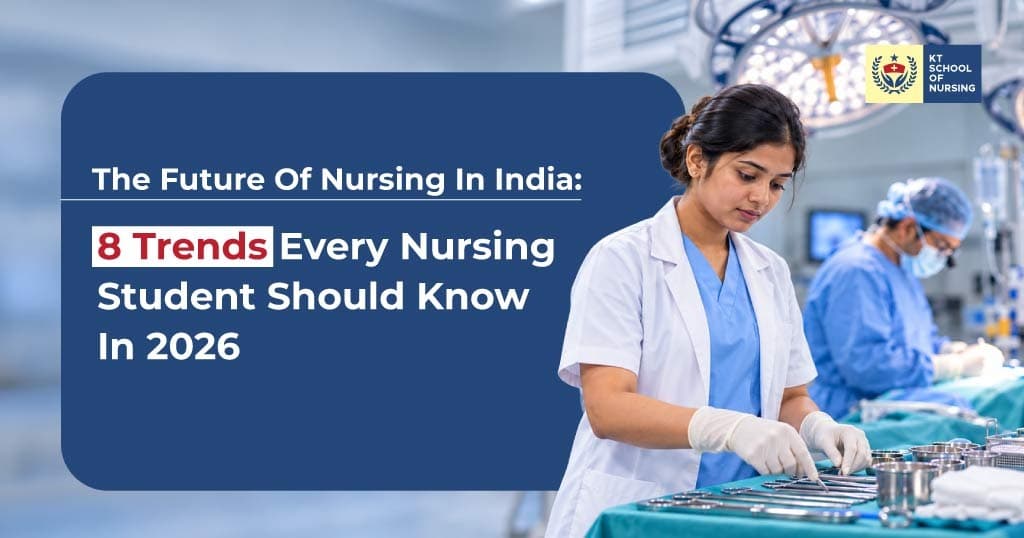
Nursing in India is changing alongside healthcare. Digital health, artificial intelligence, specialised practice, community care, leadership and learning are creating new expectations for future nurses.
Nursing remains central to healthcare, but the role of the nurse is changing. New technologies, more complex patient needs, greater attention to community health and evolving professional roles are influencing how nurses learn and work.
For students and parents exploring the Best Nursing Colleges in Bhubaneswar, choosing a course is only the beginning. It is also important to understand which skills and capabilities are likely to matter as healthcare evolves. Students can also explore nursing programmes and admission options when considering their educational pathway. The following eight trends can help nursing students prepare with a clearer view of the profession ahead.
India's healthcare system is becoming more digitally connected while responding to changing patient and community needs. Nursing students increasingly need clinical knowledge alongside digital confidence, communication, and adaptability.
Nursing is not becoming less human. As technology takes on administrative and information tasks, nurses still need clinical judgement, communication, and empathy. Future-ready nursing education needs both technical capability and human capability.
Electronic health records, telehealth platforms, digital monitoring, and artificial intelligence are becoming part of modern healthcare. India's Strategic Framework for AI in Health emphasises responsible AI, governance, safety, workforce readiness and digital literacy, with the World Health Organization (WHO) describing the framework and its priorities.
Nursing students therefore need more than basic computer familiarity. They should become comfortable working with digital systems, interpreting information and understanding where technology can support — rather than replace — professional judgement.
Healthcare is becoming more complex, creating demand for nurses with focused expertise. The Indian Nursing Council's regulations and notifications include specialised pathways and programmes such as critical care and family health, illustrating the expanding scope of nursing education. A nursing career does not have to follow a single path. Students can build a foundation first and later develop expertise aligned with their interests and opportunities.
Modern nursing increasingly depends on evidence to support clinical decisions and improve care. Students should learn how to read research, understand basic data, and distinguish established evidence from unsupported information. Not every nurse needs to become a researcher. Future nurses should be able to evaluate information and apply reliable knowledge in practice.
A nursing qualification provides a foundation, but healthcare does not stop changing after graduation. New technologies, regulations, clinical approaches, and specialisations can require ongoing learning. Students should see professional development as a continuing part of their career. Strong learning habits can help nurses adapt as their roles evolve.
Nursing is not limited to hospital settings. Community health, health education, prevention, maternal and child health, primary care, and support for underserved populations remain important parts of healthcare delivery. Exposure to community-focused nursing can broaden students' understanding of patient care and show how nurses contribute before a health problem becomes more serious.
Leadership is no longer relevant only to senior administrators. Nurses contribute to coordination, communication, quality improvement, education, and team-based care. Students can build these abilities through communication, teamwork, accountability, and problem-solving during practical learning.
Climate-related risks can affect health needs, vulnerable populations, and healthcare systems. The WHO's State of the World's Nursing 2025 report identifies climate change among issues that nursing education, practice and leadership need to address. Nursing students should therefore understand that public health can be influenced by wider environmental and social conditions. This awareness can be valuable across community and clinical settings.
Healthcare depends on having enough skilled nurses and supporting them effectively. Workforce planning increasingly considers recruitment, retention, working conditions and well-being. For students entering the profession, this reinforces the importance of healthy professional habits, communication skills and realistic expectations about teamwork and workload.
The trends above point towards a common set of priorities. Students can strengthen:
These abilities support students across nursing roles. A strong nursing education should combine classroom learning with clinical exposure, practical skill development, and opportunities to understand healthcare beyond textbooks.
When families research the Best Nursing Colleges in Bhubaneswar, the more useful question is what kind of learning environment can prepare a student for a changing profession.
Useful factors include the programme, regulatory recognition, clinical exposure, practical training, faculty support, learning facilities, and professional development opportunities. Students should verify current requirements through relevant authorities rather than relying on labels such as "best" or "top."
KT School of Nursing is located in Bhubaneswar, Odisha, and offers B.Sc. Nursing, GNM Nursing, and ANM Nursing programmes. Its published information describes academic and practical training; students exploring the Top Nursing Colleges in Odisha can review the school's programme and learning approach when comparing options.
Students considering undergraduate nursing should also compare the course structure, duration, eligibility, and clinical-learning approach of programmes available to them. Reviewing these factors can help students and parents understand whether a programme matches their educational and career goals.
The future of nursing in India will require more than clinical knowledge alone. Digital health, specialised practice, evidence-based care, community health, leadership, climate awareness, and continuous learning are shaping what future nurses will need to understand.
For students entering nursing in 2026, the goal is to build a strong foundation and keep learning. Students and parents exploring nursing education in Odisha can review programme details through KT School of Nursing's website, while those with eligibility or admission questions can contact the KT School of Nursing team for further information.
The future of nursing is likely to involve greater use of digital health tools, more specialised roles, evidence-based practice, continued learning and broader community involvement.
Future nurses will need clinical competence, communication, critical thinking, digital literacy, teamwork and adaptability. Continued learning will remain important.
AI can support information processing, decision support, research and workflow improvement. Nurses will still need professional judgement, communication and responsible technology use.
As healthcare becomes more complex, nurses may work in areas requiring focused knowledge, including critical care, mental health, emergency care and geriatric care. Specialisation can provide additional pathways.
Students should consider the programme, regulatory recognition, clinical exposure, practical training, faculty, facilities and learning support. Current admission requirements should also be checked.
B.Sc. Nursing provides undergraduate education with academic and clinical components. Students should evaluate current eligibility, curriculum, recognition, and practical-learning opportunities before choosing a programme.

Turn your passion for care into a respected profession that changes lives every single day.